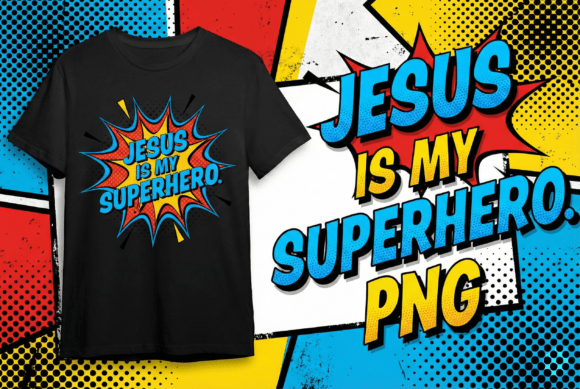
Jesus Is My Superhero Comic Style
A Designer’s First Look: Bold, Playful, and Purposefully Clear
When I opened Jesus is My Superhero Comic Style for the first time, I didn’t see just another religious design—I saw a visual contract with the wearer. The composition leans into comic book energy: strong outlines, balanced negative space, expressive but simplified facial features, and stylized lettering that reads instantly—even at 3 inches tall. It’s not overly ornate, nor is it minimal to the point of vagueness. That sweet spot matters. As a designer who regularly tests embroidery files on real garments, I immediately pictured this stitched onto a soft unisex sweatshirt for a church youth group boutique or a cotton tote bag sold at a faith-based craft fair. The mood isn’t solemn—it’s joyful, confident, and approachable. That tone translates directly into how customers *feel* about the finished product.
Where It Shines: Real Projects, Real Stitching
I tested Jesus is My Superhero Comic Style across several common small business use cases—and it held up best where clarity and character meet durability. On midweight cotton sweatshirts? Excellent. The bold outlines anchor well in satin stitch, and the fill areas stay crisp without excessive density. As a tote bag design, it scaled beautifully at 4.5 inches wide—clean lines stayed sharp, and the design retained its graphic punch even after washing a test sample three times. For baby embroidery—think onesies or burp cloths—I’d recommend using it at 2.75 inches max and opting for lightweight tear-away stabilizer; the curves soften nicely on knit fabrics when hooped correctly. As an embroidered patch, it works cleanly with standard border stitching and holds its shape well when fused to denim or twill.
It also lands well in gift-driven contexts: a linen pillow cover for a nursery, a tea towel for a baptism shower, or a custom apron for a volunteer kitchen team. In each case, the design reads as intentional—not generic, not rushed. That perception boosts perceived value. Customers browsing an Etsy shop or boutique shelf don’t pause to analyze stitch count—they notice whether something feels *made well*. Jesus is My Superhero Comic Style delivers that impression, especially when paired with thoughtful thread color choices (navy on cream, charcoal on oat, or burgundy on natural canvas all read beautifully).
Where to Pause—and Why
This isn’t a one-size-fits-all file. Its strength lies in balance, so it needs thoughtful placement. On highly textured fabrics like terry cloth or bouclé, the fine interior details—like the subtle shading in the cape fold or the contour lines around the emblem—can blur. Likewise, on thin or stretchy fabrics (think lightweight rayon tees or jersey baby caps), stabilizer choice becomes non-negotiable. A cutaway + tear-away combo prevents puckering and keeps those clean edges intact.
Caps and curved surfaces require extra attention. The design’s width-to-height ratio means it fits comfortably on front panels of structured caps—but avoid placing it too high near the crown seam, where distortion creeps in. And while the lettering is legible, the smallest text elements (the “My” and “Superhero” spacing) won’t resolve cleanly below 2.25 inches. If you’re planning a machine embroidery design for toddler hats or tiny bibs, scale down only after testing on scrap fabric first.
Dense stitch areas—especially the emblem’s central shield—are rich in fill stitch, which adds dimension but also weight. On lightweight linens or holiday ornaments, consider simplifying that area manually or confirming stitch density before production. Overly dense fills can stiffen delicate fabrics and reduce drape—a critical factor for handmade products meant to be worn or used daily.
What It Adds to Your Craft Business—Beyond the Stitch
For Etsy sellers and small shop owners, Jesus is My Superhero Comic Style stands out because it bridges niche appeal with broad resonance. It’s clearly faith-based, yet avoids cliché. That makes it easier to position—not as “just another Christian design,” but as part of a cohesive collection: superhero-themed nursery decor, family matching apparel, or youth ministry merchandise. Buyers respond to authenticity, and this design feels human-made, not algorithm-generated.
Visually, it supports brand consistency. Whether you’re building a line of embroidered kitchen towels or launching a series of personalized gifts, this design anchors your aesthetic with warmth and wit. It also performs well in digital previews: the contrast and shape translate cleanly into printable mockups, helping customers imagine the final product before purchase. That reduces returns and builds trust—especially important for digital embroidery file sellers who rely on accurate representation.
Practical Notes Every Embroiderer Should Check
- Always test on scrap fabric first—especially if using dark thread on light fabric or vice versa. What looks balanced on screen may need slight hue adjustment in thread.
- Review stitch density before bulk production. High-density fills look lush but can overwhelm lightweight materials or increase embroidery time significantly.
- Confirm hoop size compatibility. This design works best in 4x4 or larger hoops. If you’re limited to 3x3, verify whether a scaled-down version maintains legibility.
- Inspect small details under magnification—particularly the inner emblem lines and letter spacing—to ensure no stitches vanish during auto-digitizing cleanup.
- Test black-and-white mockups to assess contrast on both light and dark backgrounds. Some comic-style shading relies on tonal gradation that doesn’t translate to monochrome thread.
- Use appropriate stabilizer: medium-weight cutaway for knits, tear-away for stable wovens, and fusible + tear-away for patches.
- Verify licensing terms before selling finished items or offering the digital embroidery file as a standalone product. Commercial use rights vary by seller.
Final Thought: A Design That Serves the Maker—and the Message
Jesus is My Superhero Comic Style doesn’t try to do everything. It does one thing exceptionally well: it communicates joy, conviction, and creativity in a single, stitch-ready frame. It respects the craftsperson’s time with smart layout and avoids overcomplication—no unnecessary underlay, no fragile micro-details that fray after two washes. For embroidery designers building a reliable library of T-Shirt Designs, for Etsy sellers curating meaningful handmade products, or for churches creating custom apparel for volunteers, this is the kind of design that earns repeat use—not because it’s trendy, but because it works. Consistently. Quietly. Well.